








Introduction and Acknowledgements
Coming back from my five-month stay in Estonia, I had the pleasure of witnessing a culture very different from what I myself am used to. I had the fortune to meet many wonderful people, who I otherwise would have never met and who I will continue to cherish. I made numerous unforgettable memories during my time in Tallinn, and a substantial part of that I owe to the Russian-speaking minority present in Estonia.
After spending considerable time talking and interacting with ethnic Russians in Estonia, not only did I learn more about their rich culture and its far-from-lacking cuisine, but I was also confronted with their unfortunate position in Estonian society. This is partially due to the ongoing conflict in Ukraine and to historical reasons, which I will explore further below. In this article, I will be drawing on my own experience during my stay in Estonia and on statistical data available online. While I did my best to write this from a neutral standpoint, some of it is based on my own personal experience and may therefore be subject to my own biases.
Before my departure, I was aware that the country had two prevalent languages, Estonian and Russian. While I knew that there were some ongoing tensions between the local Estonian people and the ethnic Russian minority, only after my arrival did I truly comprehend the extent to which this division stretched. Not only did I witness a strong repulsion from Estonians towards the Russian minority, but also towards international students who were learning Russian. How is it that there was such strong hostility towards everything Russian-related — beyond the obvious ongoing conflict in Ukraine — when ethnic Russians make up such a large part of the Estonian population? To understand how we got here, we have to go back in history.
The Soviet Legacy
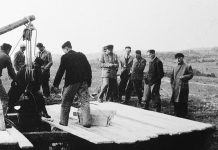
Since Estonia’s incorporation into the USSR, many Russians migrated to the country. The number of Russian speakers in Estonia subsequently rose to roughly one third of the total population by 1989. In the Baltic states especially, immigration following the forced annexation into the Soviet Union was widely perceived as a form of colonial domination. Many of these newcomers were not seen as ordinary migrants but as agents of Soviet control — military personnel, security service operatives, and centrally imposed party officials and economic administrators — making the label of “colonizers” difficult to dismiss (Wiegandt, 1995).
Stateless in Their Own Home
Many of the Russians who migrated to Estonia — from the Soviet era and more recent times alike — found themselves in a difficult situation. One of the major problems over the years has been the integration of Russian-speaking communities, with a lack of promotion of Estonian culture and language. This led to an even greater divide between local Estonians and the Russian minority, with discrimination often being the consequence. The exclusive citizenship strategy certainly did not help, leaving many ethnic Russians stateless. According to studies from 2017, some 19% of ethnic Russians living in Estonia are non-citizens (Koch, 2024). Another contributing reason lies in the rigid language requirements for citizenship, which made it harder for ethnic Russians to find work and housing.
How do ethnic Russians in Estonia feel about the situation? I have personally spoken with a few of them, and their answers were rather surprising. There is definitely a wide range of discrimination towards ethnic Russians, not only in workplaces and schools, but also in daily life. They are often looked down upon, and there is a general animosity in the air. To some degree, ethnic Russians are automatically associated with Putin’s regime. It is quite unfortunate to see that people still get judged solely on the basis of their government’s actions. Nevertheless, many ethnic Russians recognise the importance of cultural integration for themselves and their children, which also means learning the Estonian language — easier said than done.
I want to give special attention to one particular girl of Russian descent, who found herself in an extremely difficult situation. I came to know her story through friends I made in Estonia. For the sake of privacy, I will not disclose her name. It has been many years since she decided to leave her home country behind and emigrate to Estonia. I do not know the specific reasons that led her to relocate. While living in Estonia, her Russian passport expired, leaving her stateless. She has difficulties learning the Estonian language and was therefore unable to obtain Estonian citizenship. She struggles to find work due to discrimination and language requirements and is at risk of losing her home. Stateless, without valid documents, constantly at risk of losing their jobs and homes, and facing heavy discrimination — this is the unfortunate reality that many ethnic Russians must face in Estonia.
An Unequal Playing Field
First of all, I feel like there is a need to address just how difficult Estonian is as a language. It is ranked as one of the most difficult languages to learn, partially due to its 14 grammatical cases. Another major issue that needs addressing is the educational inequality. Unfortunately, there is a significant disparity in the quality of education between schools where the curriculum is taught in Estonian and those where it is taught in Russian. This leads to lower learning outcomes, with some schools showing a gap of roughly a year in certain subjects. Efforts have been made to transition towards teaching more in Estonian, but when asked whether this transition offers all children in Estonia, regardless of mother tongue, an equal opportunity to receive a quality education, the answers varied quite drastically. Looking at the responses of all respondents, 45% strongly agreed with the statement, 29% rather agreed, 14% rather disagreed, and 9% strongly disagreed. However, looking at the responses from only non-Estonian respondents, there is a substantial shift in the numbers: 12% strongly agreed, 24% rather agreed, 26% rather disagreed, and 24% strongly disagreed (Saar, 2023). The data shows that Russian-speaking youth are struggling with Estonian, while at the same time, the education offered in Russian-speaking schools is substantially lower in quality than its Estonian counterpart. This only deepens the already existing social divide, which carries various implications. Social barriers are only reinforced: Estonian and ethnic Russian children do not socialise, interact, or talk to one another. The government maintains that these measures are designed to ensure equal academic and professional opportunities for all, but in reality, they appear to do little to nothing of the sort.
People, Not Politics
The present animosity towards the ethnic Russian population is understandable to a certain degree, given the current conflict in Ukraine and the declining public image of Russia’s government. It is nevertheless regrettable that all associations with Russian culture, language, and people are judged and viewed through a filtered lens, where no distinction is made between politics and culture. This way of thinking, however, reveals a paradoxical assumption. The majority of ethnic Russians, as stated above, have every intention of integrating into Estonian society and culture, precisely because they do not wish to return to Russia. They have deemed Estonia — whether for safety concerns or living standards — a more suitable place to live and to raise their children.
We are certainly living in difficult and complicated times where fear and uncertainty are more prevalent than ever. However I do hope that despite all, we can aspire to look beyond simplistic political narratives and see people for who they truly are: people, just like all of us, searching for acceptance and striving for peace, caught between the hopelessly corrupt and the relentlessly discriminating, trying to find their place in this confusing but nevertheless beautiful world.
Sources
Koch, J. (2024). Russian Minorities in Estonia and Latvia: Combating Discrimination. Retrieved from https://borgenproject.org/russian-minorities-in-estonia-and-latvia/
Saar, S. (2023). Educational inequality the face of Russian school in Estonia. Retrieved from https://news.err.ee/1609124783/educational-inequality-the-face-of-russian-school-in-estonia
Wiegandt, M. H. (1995). The Russian minority in Estonia. International Journal on Group Rights, 3(2), 109–143. http://www.jstor.org/stable/24674477